Jewelry labels may be small, but they need to do more than display prices or product details. In a jewelry store, labels often sit under display lights for hours, while others are handled daily as staff organize inventory, pack orders, and prepare products for sale. Ordinary paper labels may fade, wrinkle, or peel over time.
What, then, is the ideal material for durable jewelry labels? The answer depends on where they're used and how well they resist heat, moisture, and daily wear. Let's explore the options and find the best fit for your jewelry business.
What Are the Best Materials for Long-Lasting Jewelry Labels?
Not all label materials perform the same way. A paper tag that's perfectly fine for a temporary price mark may not be the best choice for jewelry that stays in a display case for months.
Here are three common options to consider.
Standard Paper
Affordable and easy to print. Best suited for temporary price tags and short-term labeling.
Synthetic Materials
PET labels offer better resistance to moisture, tearing, and everyday surface wear.
Thermal Transfer
Ribbon-based printing helps produce clear text when matched with compatible label materials.
Standard Paper Labels: Are They Durable Enough for Jewelry?
Paper labels are affordable and easy to print, making them a good choice for temporary price tags, product notes, and short-term organization.
However, they have a few drawbacks:
- Moisture: Paper can wrinkle or lose its shape when it gets wet.
- Wear and tear: Frequent handling can cause labels to tear or become worn.
- Print quality: Text may fade or become harder to read over time.
For a jewelry business that frequently updates prices or uses temporary product tags, standard paper may be enough. But if you want labels to look presentable throughout long display periods, a more durable material is worth considering.
Synthetic Labels: A Better Choice for Water and Wear Resistance
Compared with standard paper labels, synthetic materials like PET are a better choice when labels need to withstand everyday wear and tear. They offer:
- Better resistance to water and moisture.
- Greater resistance to scratches, surface wear, and tearing.
- A more durable surface for long-lasting product identification.
For example, a jewelry boutique may use synthetic labels on inventory bags or storage containers that employees open and handle regularly.
They're also useful for labeling packaging that may come into contact with hands, dust, or occasional moisture.
Keep in mind that not all synthetic labels are identical. Their performance depends on the material, surface coating, adhesive, and printing method.
Thermal Transfer Labels: Why Ribbon Printing Matters
The printing method matters just as much as the label material.
Thermal transfer printing uses heat to transfer ink from a ribbon onto the label surface. This creates printed text that can be more resistant to smudging and everyday wear than many conventional printing methods, depending on the ribbon and label combination.
For jewelry businesses, this is particularly useful when printing small details such as:
- Product names and SKU numbers.
- Jewelry styles and item codes.
- Prices and product identifiers.
- Short descriptions for inventory organization.
Thermal transfer printing can be a sensible option for labels that need to stay legible throughout normal use and storage when matched with suitable synthetic label materials and ribbons.
What Makes Jewelry Labels Resistant to Tarnishing, Heat, and Everyday Wear?
A jewelry label may look perfect when you first print it, but what happens after weeks or months of use?
Before choosing your labels, consider the conditions they'll face in your store or workspace.
Moisture, Oils, and Frequent Handling
Jewelry is handled frequently, especially in retail stores where customers want to see how a ring, bracelet, or necklace looks before buying it.
Staff also move products between display cases, trays, storage bags, and packaging throughout the day.
During these everyday activities, labels may come into contact with:
- Natural oils from fingers and palms.
- Moisture from handling or damp surroundings.
- Friction from jewelry trays, boxes, and packaging.
- Repeated contact with different labels and surfaces.
Regular paper labels can wear out over time, especially with frequent handling. Waterproof, oil-resistant labels are a better choice for everyday use, helping keep product information clear and readable for longer.
Can Jewelry Display Lights Damage Your Labels?
Jewelry labels may sit under display spotlights for hours every day. Consider heat resistance when choosing materials for long-term retail displays.
Walk into a jewelry boutique, and you'll notice that display lighting is carefully arranged to make diamonds sparkle and gold and silver pieces stand out.
Small price tags and product labels often sit right beside the jewelry, sometimes under LED spotlights for extended periods.
Though many contemporary LED lights generate less heat than conventional lighting, the actual temperature around a display case depends on the fixture, lighting arrangement, distance, and ventilation. Some settings expose nearby labels to noticeable heat over time.
This is important because extended heat exposure could degrade some label materials and adhesives.
For example, an ordinary paper label may:
- Curl around the edges.
- Lose its original shape.
- Experience adhesive weakening.
- Become less presentable after extended display.
When choosing labels for jewelry display cases, don't just look at how they appear when freshly printed. Consider how they'll perform under the lighting conditions in your store.
Choose label materials that have been tested for heat resistance, along with compatible ribbons and adhesives. If your display cases use strong spotlights, testing a sample in the actual display environment is a sensible step.
Heat resistance and UV resistance aren't the same thing. If your display lighting produces significant UV exposure, consider light resistance separately.
Will Jewelry Labels Affect Silver, Gold, or Other Metals?
There's an important distinction between durable labels and tarnish-resistant jewelry.
A label that resists water, oil, and wear doesn't automatically prevent the jewelry itself from tarnishing.
Silver, copper, and some other metals can change color when exposed to moisture, air, sulfur-containing compounds, and certain environmental conditions.
That's why label placement matters.
For valuable or delicate jewelry, avoid sticking labels directly onto the metal surface. Instead, consider:
- Attaching small tags to jewelry display holders.
- Labeling individual jewelry bags.
- Using separate product cards or packaging labels.
- Placing SKU labels on storage compartments.
This keeps product information easy to find without unnecessary contact between adhesives and delicate jewelry surfaces.
Choosing the Right Label Adhesive and Placement
Even a durable label material won't perform well if the adhesive isn't suitable for the surface.
Think about where your labels will be placed:
| Labeling Location | What to Consider |
|---|---|
| Jewelry display holders | Clean appearance and reliable adhesion |
| Jewelry storage bags | Flexible labels that stay attached |
| Plastic storage boxes | Adhesion to smooth surfaces |
| Gift packaging | Neat appearance and easy product identification |
For display cases, choose an adhesive suitable for the surface and expected temperature conditions. If you're unsure, test a few labels before printing a full batch.
How to Choose the Right Jewelry Labels for Different Jewelry Business Needs
The best label isn't necessarily the same for every jewelry business. A boutique displaying diamond rings has different needs from a handmade jewelry seller packing orders at home.
Here's how to approach some common situations.
Jewelry Price Tags for Retail Stores and Display Cases
In a jewelry boutique, every item needs to be easy to identify without distracting from the jewelry itself.
Large labels can make a display look cluttered, especially when you're arranging small earrings, rings, and delicate necklaces.
Small jewelry price tags can help you display essential information while keeping the focus on the product.
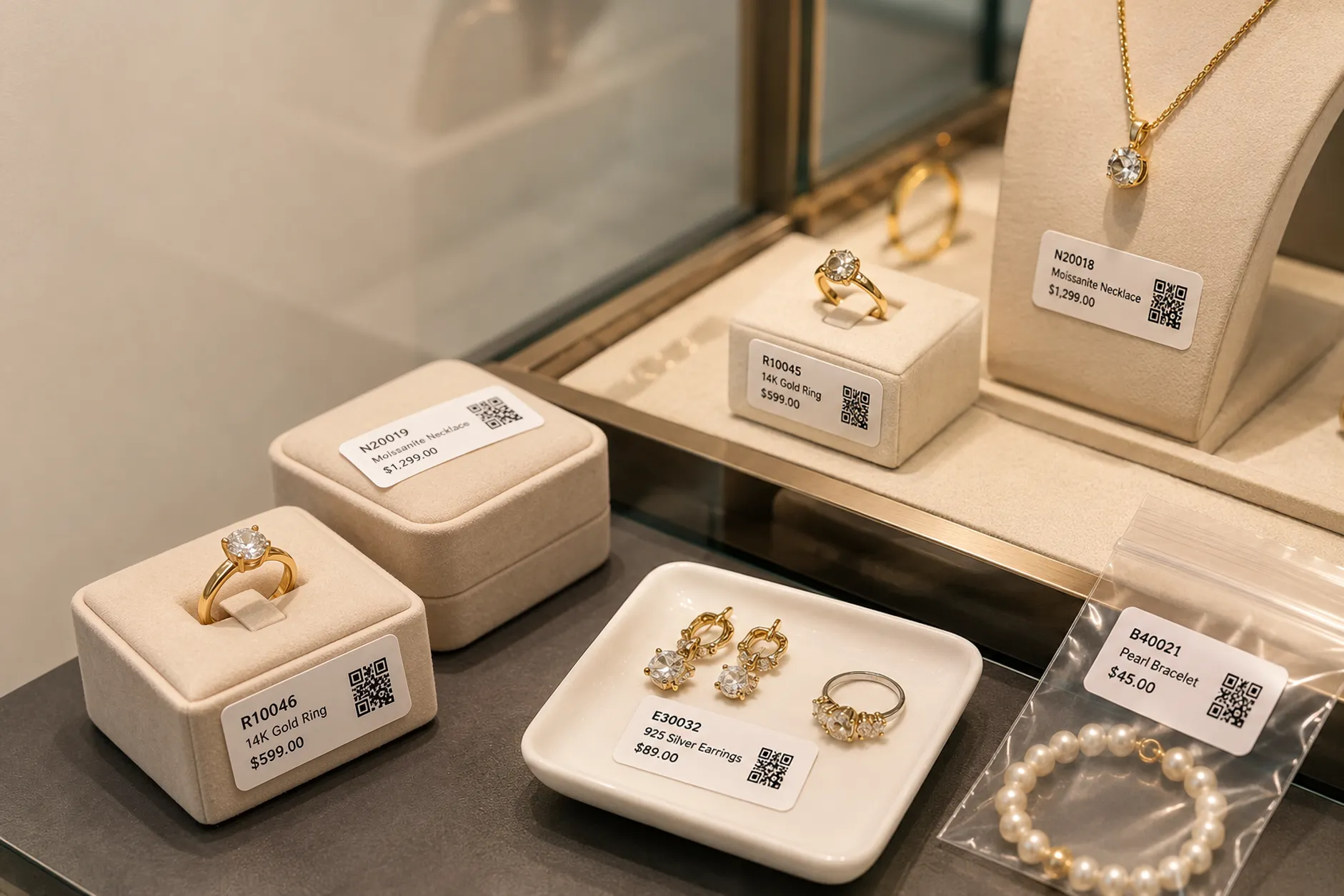
Depending on your store's needs, you might include:
- Price.
- Product or style number.
- Material, such as 14K gold or sterling silver.
- A short SKU or item code.
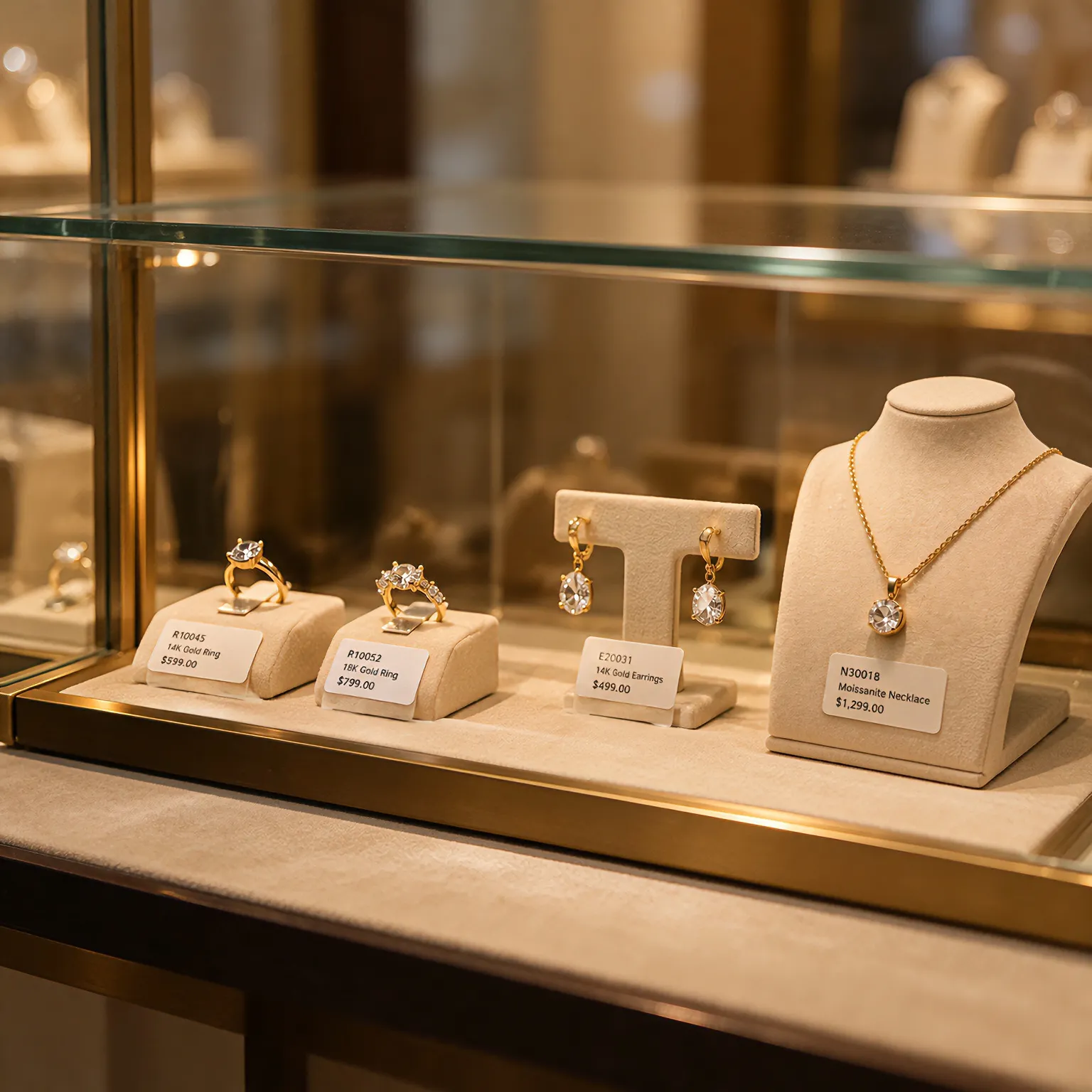
For jewelry displayed under spotlights, choose labels that can withstand the actual temperature conditions in your display case.
Inventory Labels for Jewelry Storage and Organization
Keeping track of dozens or even hundreds of jewelry pieces isn't always easy.
Imagine having several similar silver necklaces or gold-plated bracelets stored in different bags. Without clear labels, it's easy to mix them up or waste time looking for the one you need.
A simple inventory label can help you identify each item at a glance and keep your jewelry collection organized.
You can use them to identify:
- Jewelry styles and collections.
- Product SKU numbers.
- Ring or bracelet sizes.
- Materials and product variations.
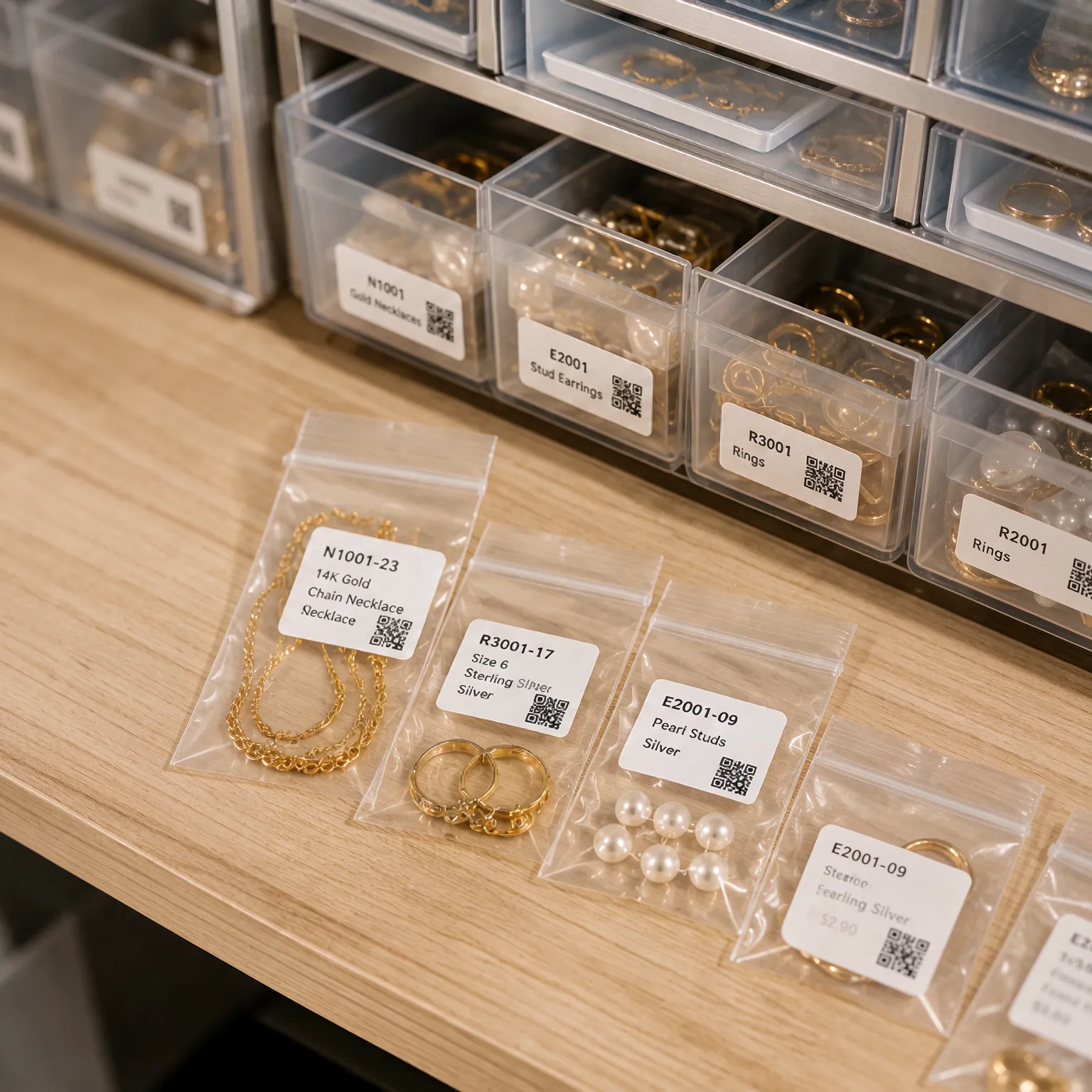
For example, a small label on each storage bag can show a product code and style name. Staff can then find the correct piece without opening every bag.
This is especially helpful for independent jewelry brands, small boutiques, and handmade jewelry businesses that manage their own inventory.
Labels for Jewelry Packaging and Handmade Jewelry Businesses
For handmade jewelry sellers, packaging is part of the customer experience.
Whether you're shipping handmade earrings, personalized bracelets, or small gemstone necklaces, a clean and consistent label can make your packaging feel more organized.
You can use small labels for:
- Product names and item codes.
- Packaging identification.
- Order sorting and fulfillment.
- Collection names or simple branding details.
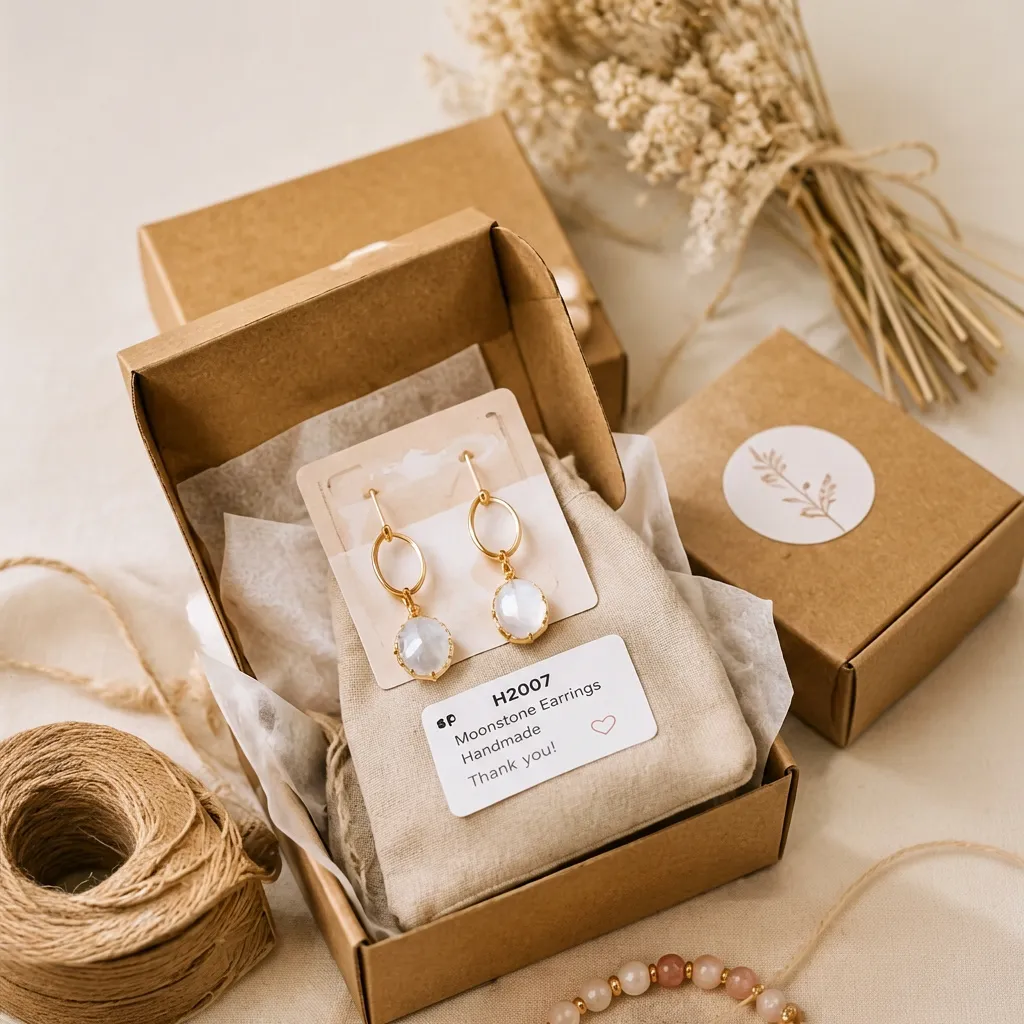
A consistent label style across your packaging also helps create a more recognizable look for your small business.
How to Print Small, Durable Jewelry Labels with NIIMBOT N1
If you often print small product tags, SKU labels, or inventory stickers, a compact label printer can save you time and make everyday labeling easier.
The NIIMBOT N1 is a handheld thermal transfer label maker designed for small-format labeling. It's a practical choice for labeling jewelry, organizing small items, and keeping track of inventory.
Print Small Jewelry Labels That Fit Your Products
Jewelry labels often need to fit into tight spaces without covering too much of the product or display area.
With support for 8–14 mm label widths, the NIIMBOT N1 can help you create compact labels for:
- Small jewelry price tags.
- Product and SKU identification.
- Jewelry storage bags and boxes.
- Small packaging labels.
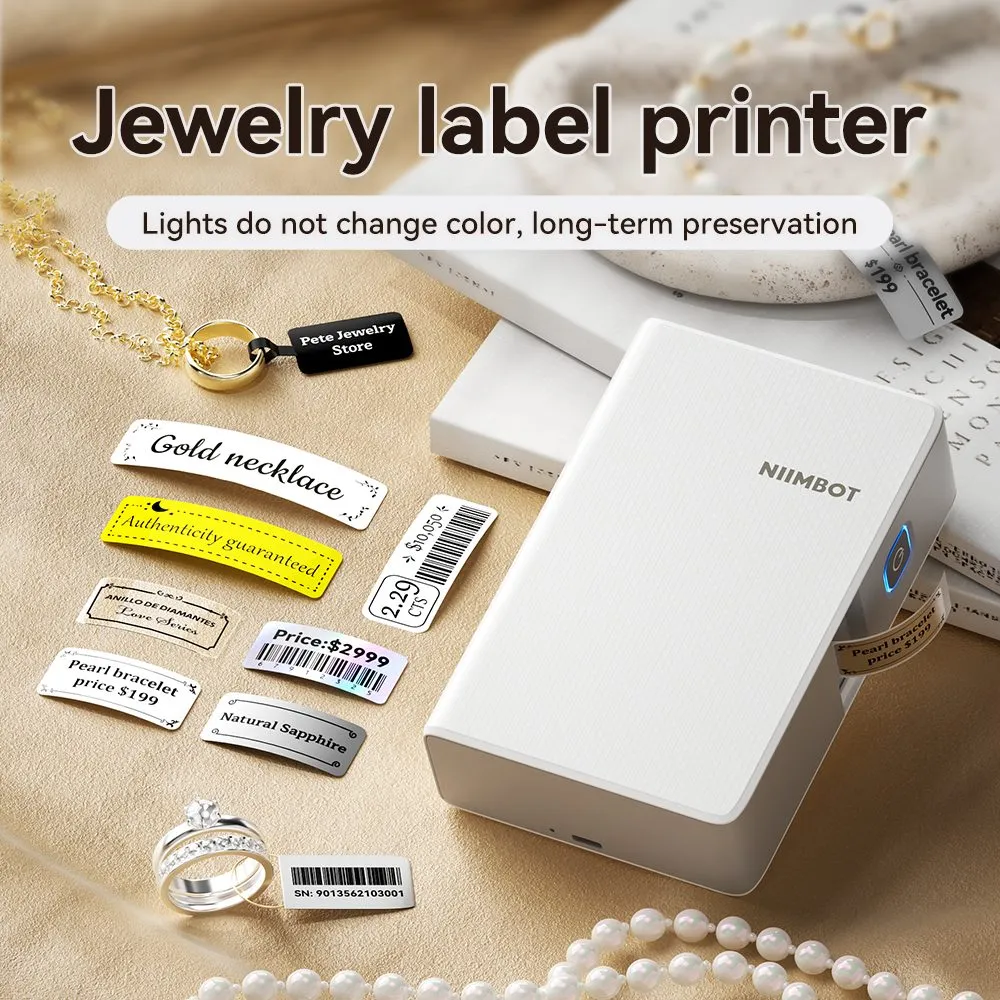
Its handheld design also makes it convenient for jewelry shops and small studios where there's limited workspace.
Keep Labels Clear Under Display Lighting and Daily Handling
The NIIMBOT N1 uses ribbon-based thermal transfer printing to create clear, durable labels. With the right label materials, they can resist water, oil, everyday wear, and heat from display lights. This makes the N1 a practical fit for jewelry shops, from display cases to storage areas. Just choose label rolls that suit your needs.
Design Jewelry Labels Easily with the NIIMBOT App
You don't need fancy design software to make professional-looking jewelry labels. The NIIMBOT N1 connects to your phone via Bluetooth, so you can easily design and print labels using the NIIMBOT app. With ready-made templates and design options, it's easy to create labels for different products and everyday business needs.
You can quickly prepare:
- Price and SKU labels.
- Product identification stickers.
- Jewelry storage labels.
- Simple branded packaging labels.
Whether you're organizing a jewelry collection or preparing a new batch of products for display, the N1 offers a convenient way to handle small-format printing.
Meet the NIIMBOT N1
Print small-format jewelry labels with a handheld thermal transfer label maker designed for everyday organization.
Looking for a compact printer for your jewelry business?
Explore NIIMBOT N1 →