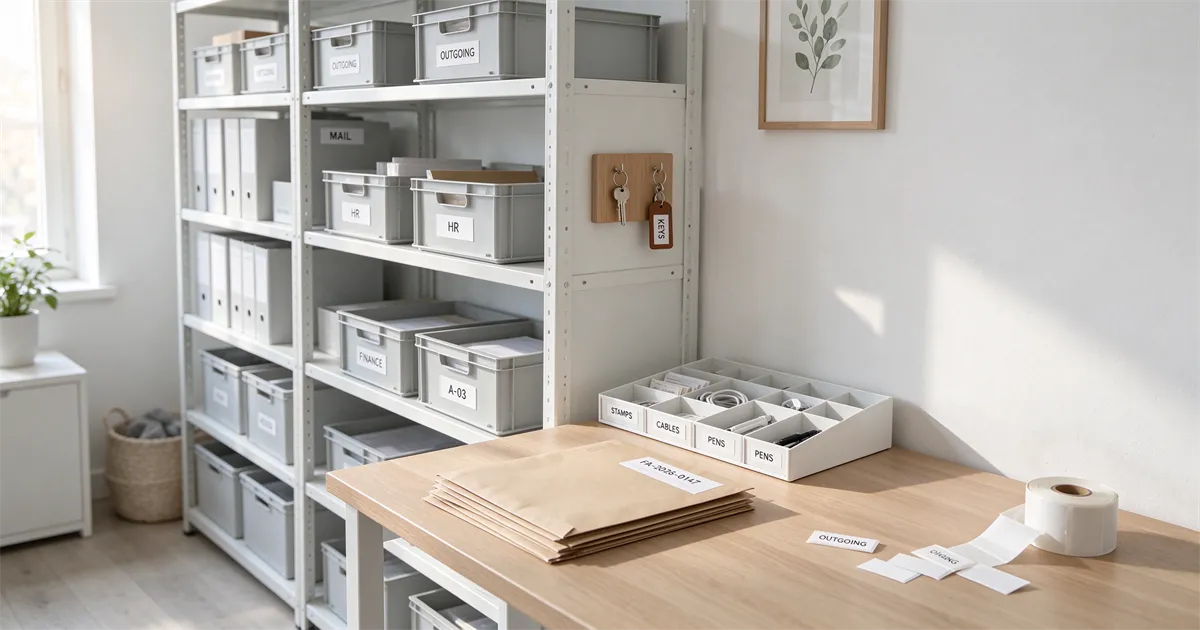
Messy workspaces for small businesses rarely happen overnight. It creeps up little by little. Finished product jars pile up next to packaging stock, loose ribbons land in the wrong drawer, and the labels you need end up buried under random clutter.
If you sell handmade goods, run a shop from home, or operate a tiny storefront, custom labels can smooth out your daily workflow. Slap a short name on a storage bin or a product tag on a jar, and you’ll save tons of time packing orders, restocking, or hunting down one specific item.
You don’t need some fancy, overcomplicated labeling system. Just a few well-placed labels can make a huge difference.
Make Handmade Products Easier to Identify
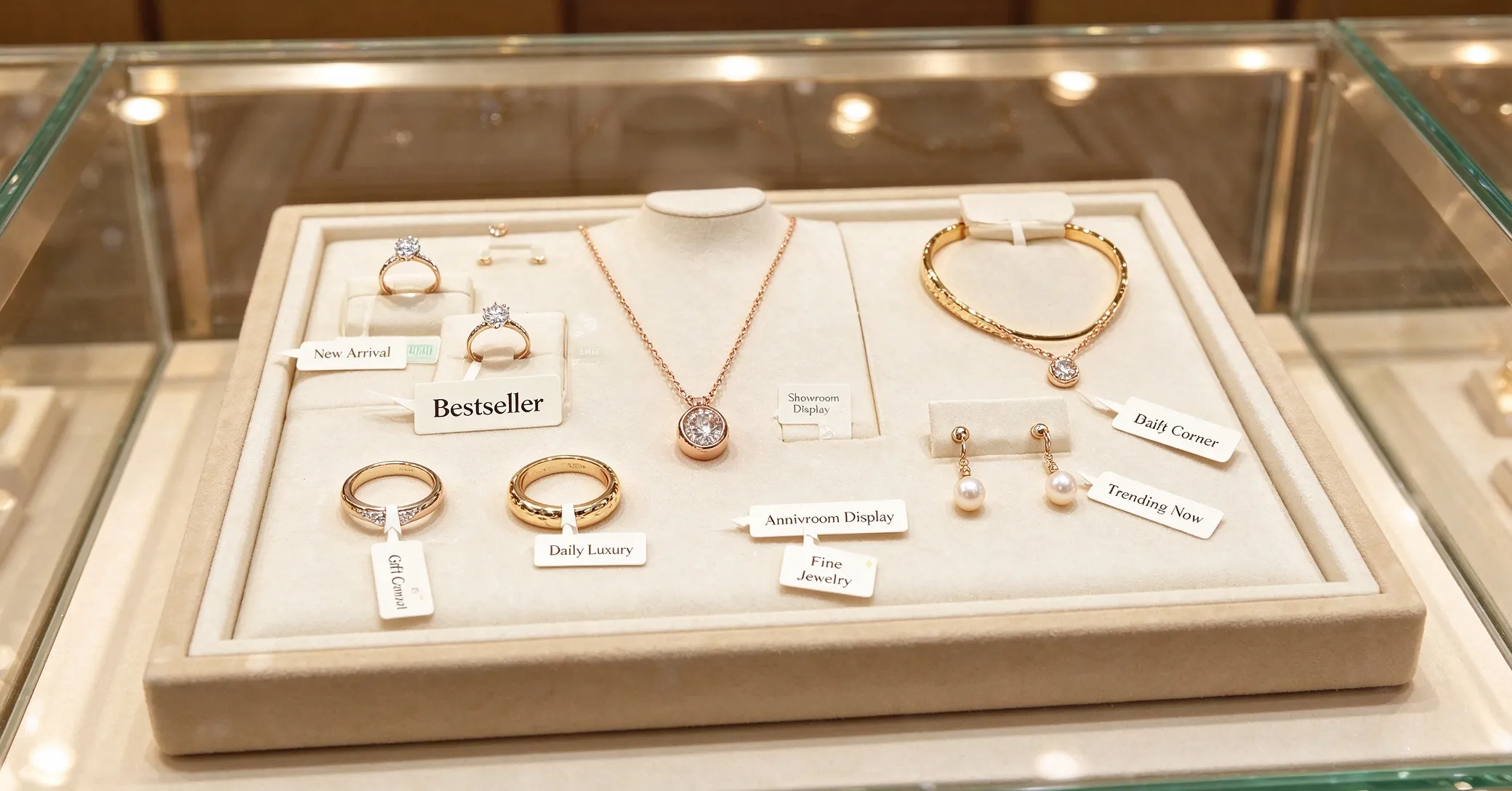
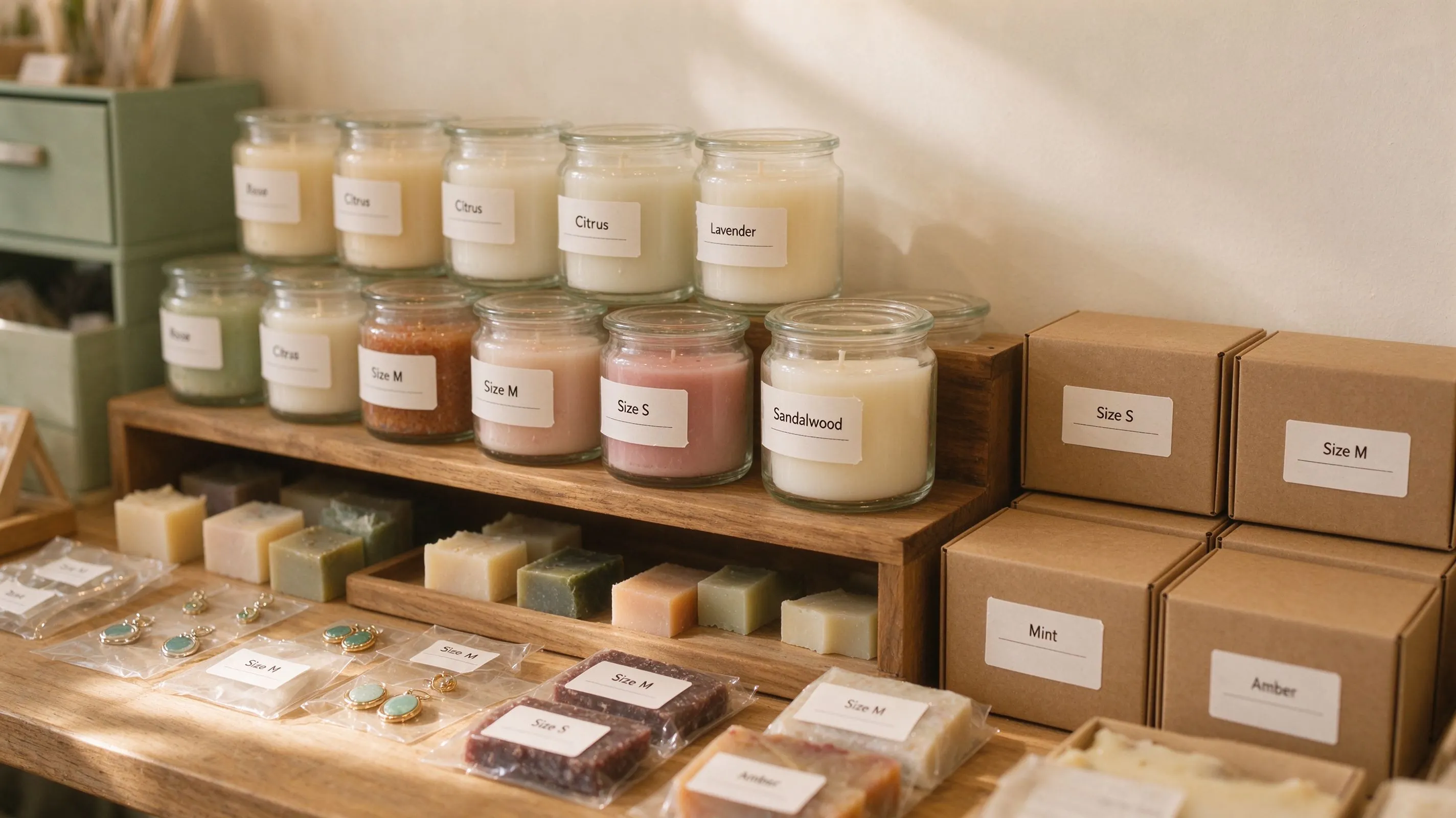
Lots of handmade items look nearly identical, and small details are everything. A candle maker might use the same glass vessel for totally different scents. Soap sellers often wrap multiple varieties in similar packaging. Without clear marking, telling them apart means squinting closely every single time.
Add the Details That Set Each Product Apart
Think about what you or anyone helping you needs to see at a quick glance. For candles, that’s usually the fragrance name. For homemade soap, note the scent or product title. If you make accessories, the color or style name is often enough.
Keep text short and snappy. “Rose,” “Citrus,” or “Lavender Soap” is way easier to scan than a long block of text crammed onto a tiny label.
Keep Labels Consistent Across a Product Range
When you sell multiple versions of one item, stick to a similar label layout. Put the product name in the same spot and use matching fonts. You can switch up label colors or add a tiny icon to tell variants apart.
Your labels don’t have to look like mass retail packaging. The goal is simple: everything feels clear and familiar across your whole line.
Use Labels to Tell Product Sizes and Variations Apart
Sometimes products only differ by size, color or style. That sounds easy to keep track of — until several variants sit side by side on a shelf inside matching containers.
Mark Sizes, Colors, or Styles Clearly
A small apparel brand might need to separate sizes of the same design. A handmade gift shop may stock one item in multiple colorways. Adding that info directly to a label means you grab the right piece without guesswork.
Stick the label on the jar, storage bin, or hang tag, wherever you can read it easily without covering the product itself.
Try a Simple Color System
Color coding works great when you have multiple product collections. For example, use one label shade for a spring line and another for your fall designs.
Don’t build an over-the-top color code. Start with just two or three colors and use them consistently. If you have to stop and think what a color stands for, the system is too complicated.
Give Your Everyday Supplies a Place of Their Own
We spend lots of time focusing on finished goods, but raw materials and packing supplies get messy just as fast. Craft sellers juggle beads, ribbon, buttons, hand tools and packaging bits. Candle makers store jars, wicks, lids and fragrance oils.
Label Craft and Production Materials
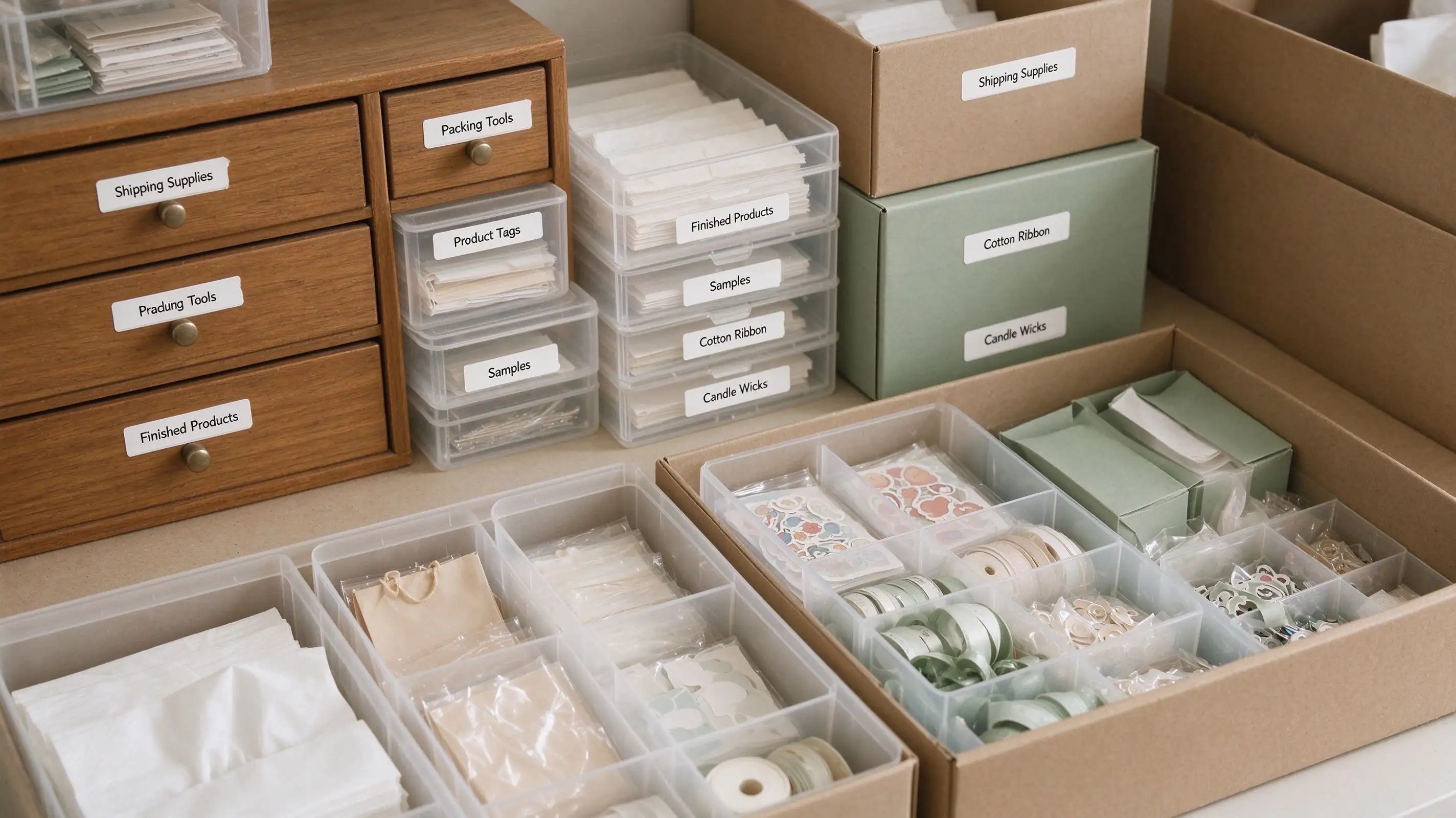
Start with the bins you open most often. A simple label reading “Cotton Ribbon,” “Candle Wicks,” or “Jewelry Findings” is usually all you need.
You don’t have to label every single bead or button individually. Marking the whole box or drawer is far more practical for small bulk supplies.
Keep Packaging Supplies Easy to Find
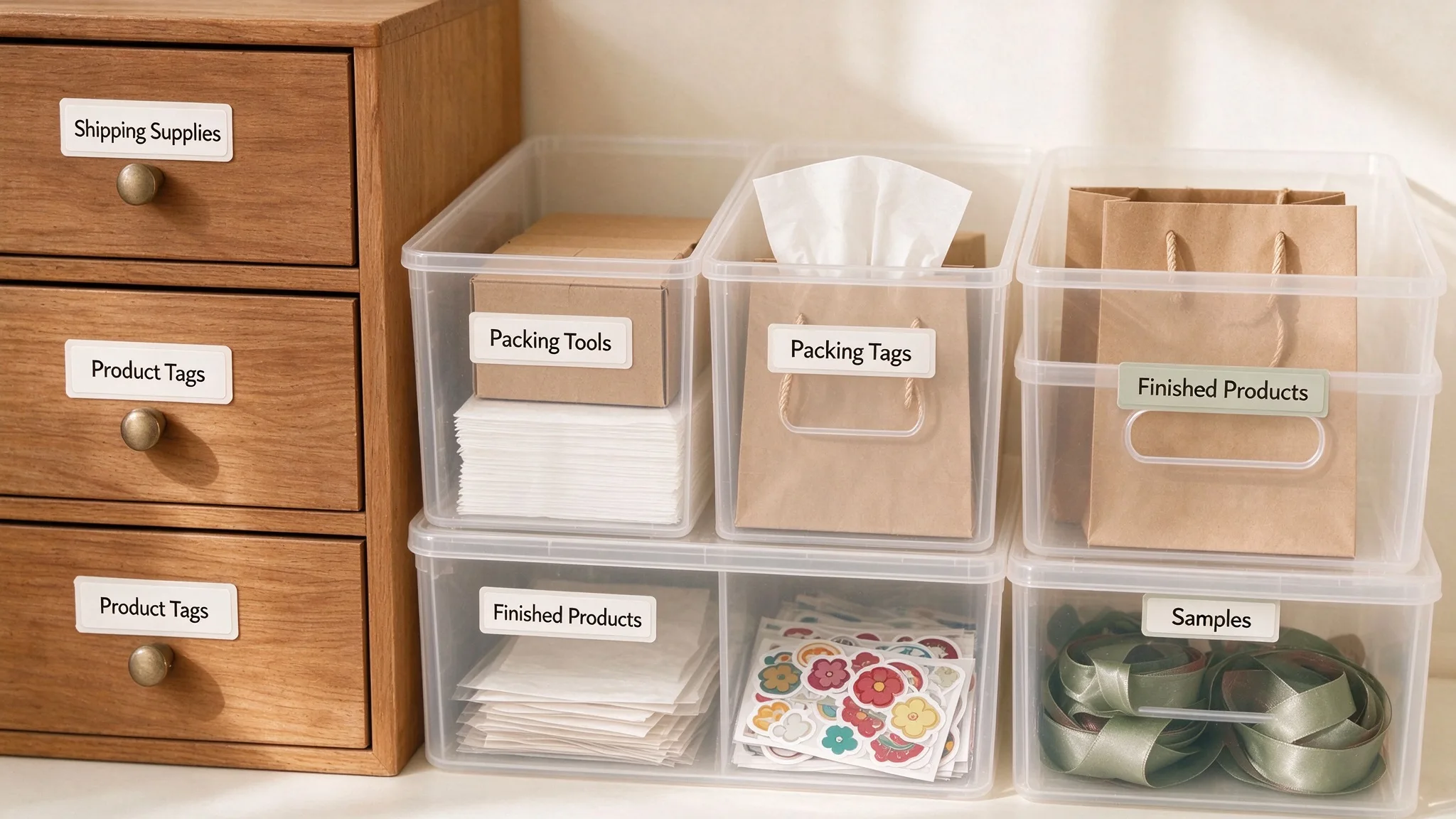
Shipping boxes, tissue paper, gift bags, stickers and ribbon can quickly take over your packing station. If you stock multiple sizes, mark each container so you don’t have to rummage through box after box.
This trick works for small tools too. A drawer marked “Packing Tools” or a bin labeled “Product Tags” gives every item a home after you finish an order.
Make Shelves and Work Areas Easier to Navigate
Most small businesses don’t have a dedicated stockroom. You might make goods in a spare bedroom, pack orders at your kitchen table, or tuck supplies into one corner of a shared room.
Mark Storage Boxes, Drawers, and Shelves
Label the storage spots instead of tagging every single thing inside them. A shelf for finished stock, a bin for samples, a drawer for packing materials — these are all great starting points.
This is especially handy when you use matching containers. One quick glance at the label tells you the contents, no unpacking required.
Make Shared Spaces Easier for Others to Use
If family members or part-time helpers step in to pack orders, clear labels cut down on constant questions about where everything belongs.
Use plain, straightforward wording. Skip cutesy internal nicknames only you understand. “Shipping Supplies” or “Finished Products” aren’t flashy, but anyone can read them instantly.
What Should You Put on a Small Business Label?
The info you add depends entirely on what you’re labeling. A candle tag needs the scent name, while a storage bin only needs a short description of what’s inside.
Choose Details That Help You Recognize the Item
Common details to include:
- Product name
- Size or color (for lookalike variants)
- Scent or style (candles, soap, handmade goods)
- Category: craft stock, packaging supplies, finished goods
- Contents description for bins and drawers
You don’t need to cram all five onto every label. Only add details that help you identify things quickly.
Keep the Text Short and Readable
Label space is limited. Tiny, crowded text won’t help you when you’re rushing to fulfill orders.
Pick a clean font, leave blank space around your words, and match your label size to the surface you’re sticking it on. One quick note: identification labels don’t replace legally required packaging disclosures. Food, cosmetics and other regulated goods have separate mandatory labeling rules to follow.
How to Make Your Own Labels for a Small Business
You don’t have to re-label your whole workspace in one marathon session. Pick one product line or that one messy drawer you always struggle with, and go step by step.
Write Down the Information First
Before printing anything, jot down all the names, sizes, colors and supply labels you need. This keeps your wording consistent, especially when you’re making labels for multiple variants of the same product.
Choose a Suitable Label Size and Material
Think about where this label will live. A tiny jar needs a compact sticker, while a storage tub can fit bigger lettering. Also check the surface — pick a label material that holds up for that use case.
Print a Sample Before Making a Full Set
Always test one single label first. Check if the text is easy to read, confirm the size fits, and make sure it sticks well to your surface.
A quick test run saves you from wasting a whole sheet of labels that end up too big, too small or hard to read.
Create Custom Small Business Labels with the NIIMBOT D110
If you print labels regularly, making them yourself beats handwriting every single one.
The NIIMBOT D110 pairs with the NIIMBOT mobile app. Type in product names, sizes, colors, add icons and short notes, then tweak fonts, text size and layout however you like.
The NIIMBOT D110 works with white, colored and clear label tapes. Plain white labels are perfect for simple product and storage names. Colored labels help split up product groups, and transparent stickers give a subtle, clean look on the right surfaces.
You don’t have to use the same design everywhere. A plain title for a supply bin, a scent tag for candles, and a variant label for product lines can each have their own simple layout.
Ready to build neat, custom labels for your handmade shop and storage space?
Shop NIIMBOT D110 Label Maker