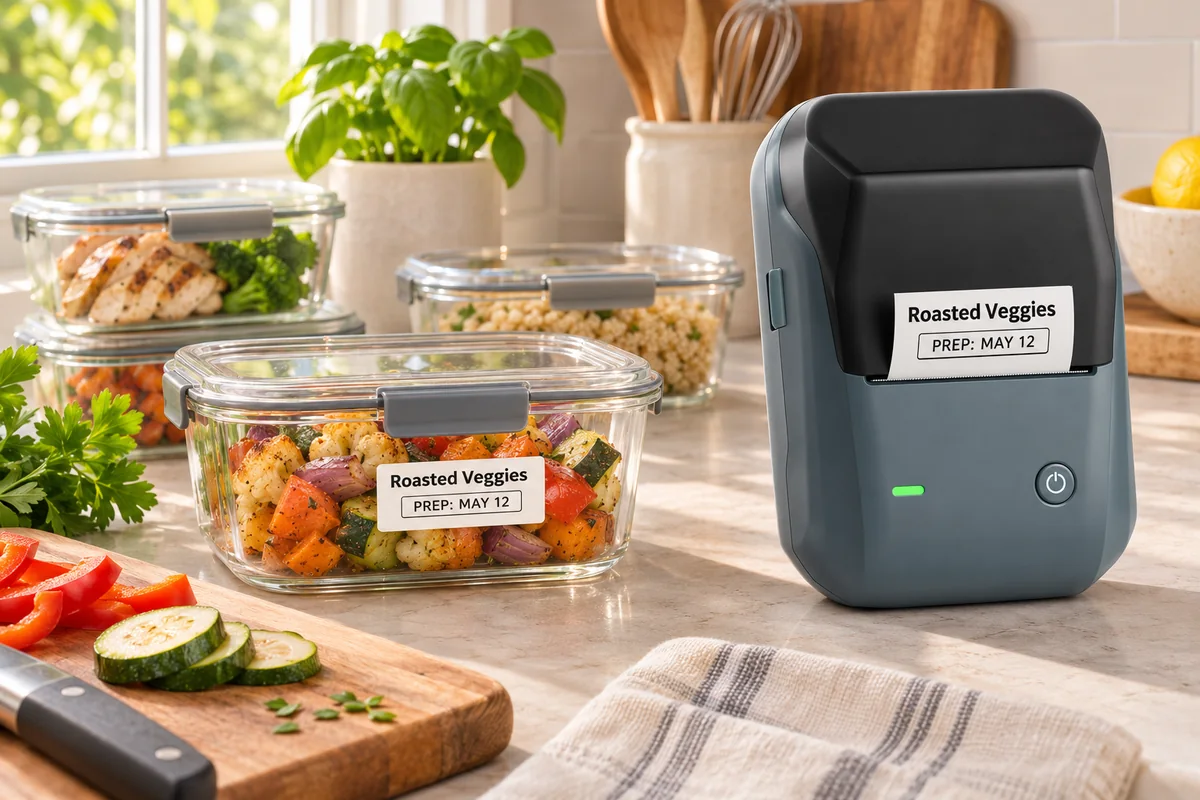
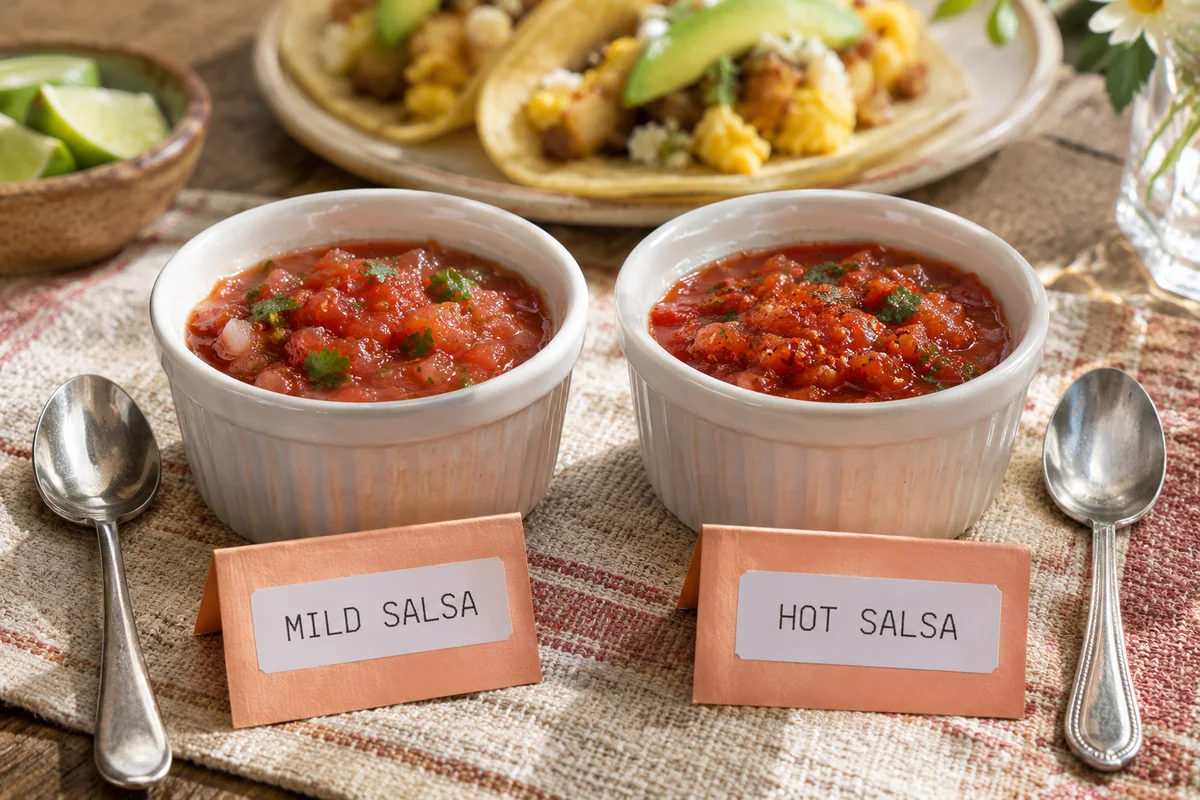
Two red salsas sit beside a platter of breakfast tacos. You know which one has the extra chiles. The person holding a plate in one hand and a spoon in the other has to guess. These are the moments that deserve brunch buffet labels. Print MILD SALSA and HOT SALSA with the NIIMBOT B1, stick each label to a folded piece of cardstock, and set one card directly in front of each bowl.
You can set a whole brunch table with just a handful of cards. For a menu of tacos, mini quiches, waffles, fruit, and coffee, give your attention to three decisions guests will make: which salsa to spoon, which filling to pick, and which coffee to pour. The waffles and strawberries can speak for themselves.
Start with the serving dishes
The evening before brunch, set the empty bowls, platters, and carafes on the table. This gives you a better count than the recipe list. One recipe for breakfast tacos might need two salsa cards. A spread with five kinds of fresh fruit might need none. Count the places where someone will pause with a serving spoon.
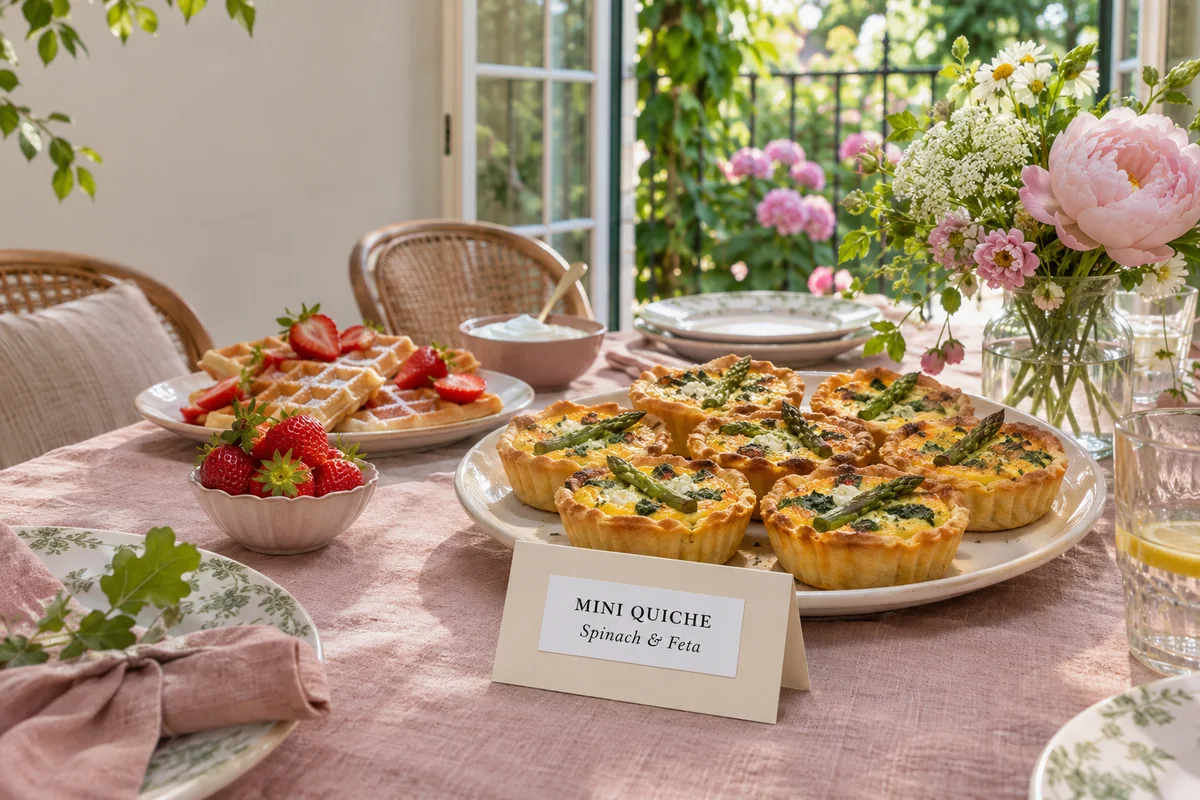
Look for dishes with a detail hidden inside. Spinach and feta mini quiches can look a lot like cheddar and chive ones once the tops have browned. Put the two flavors on separate small plates and give each plate its own card. If you only have one large board, leave a little space between the groups and set a card at each end, close to its corresponding quiches.
Do the same at the drinks end. Two identical coffee carafes need a pair of names, even if the decaf pot has a different handle. Someone helping in your kitchen for the first time can use those names to set down a fresh pot in the right place. Put the two printed cards beside the empty carafes while you set up, then match each freshly brewed batch as you fill them.
Six brunch buffet labels you can copy
For a six-card set, use the wording below as a starting point. The salsa and coffee cards take one line each. The quiche cards have a main line for the dish and a second line for the filling. Change that second line to match the recipe you actually served.
| Dish or drink | First line | Second line |
|---|---|---|
| Milder red salsa | MILD SALSA | — |
| Spicier red salsa | HOT SALSA | — |
| Spinach quiches | MINI QUICHE | Spinach & Feta |
| Cheddar quiches | MINI QUICHE | Cheddar & Chive |
| Regular brew | REGULAR COFFEE | — |
| Decaf brew | DECAF COFFEE | — |
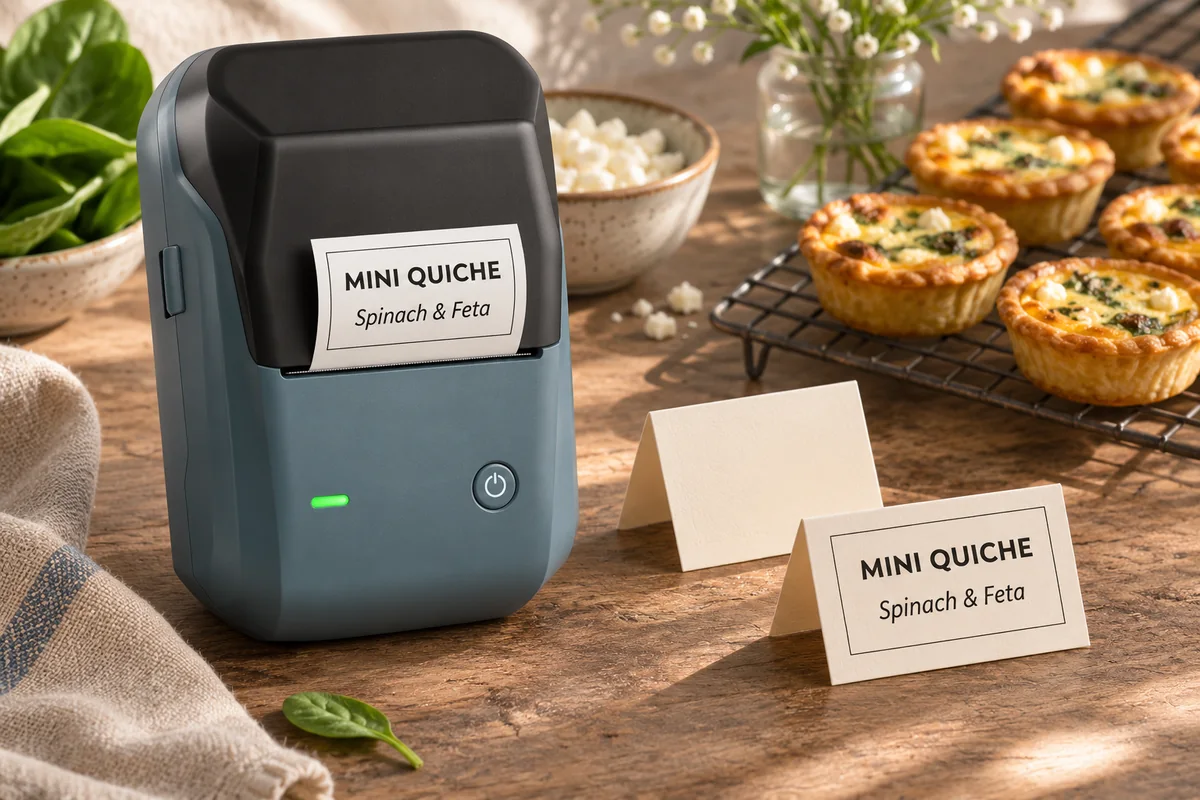
Read the longer names as though you were ordering from a menu. “Mini quiche with spinach and feta cheese” sounds fine spoken aloud. On a little paper tent, “MINI QUICHE” above “Spinach & Feta” gives the eye two short lines to follow. If both names still run small on the stock you have, move “Quiche” to a single platter heading and use the individual cards for the fillings.
A second line earns its space when it changes a choice. “With lemon zest” might help distinguish two pans of French toast. “Homemade with love” would fit better on a welcome note near the plates. Save the big, easy-to-read letters on a food card for words a guest can use.
Turn a B1 label into a standing tent card
Gather a sheet of cardstock, scissors, a ruler, a B1-compatible label roll, and the printer. An unlined index card makes a good first sample. Fold one before cutting the rest so you can see how tall it stands beside your dishes. A low berry bowl and a raised cake stand can each hide a card in a different way.
- Size the paper around the sticker. For a 50 × 30 mm label, try a piece of cardstock 80 mm wide and 100 mm tall. Fold it halfway down the long dimension. Each face will measure 80 × 50 mm, with room around the printed sticker. To make a quick version with fewer measurements, fold a plain 3 × 5 inch index card so the folded edge runs along the three-inch side.
- Set up one sample label. Choose the label dimensions that match the roll in your B1. Start with your longest wording, usually REGULAR COFFEE or the cheddar quiche card. Use plain black type and leave a little room at both ends. A bold heading and a lighter second line give the two pieces of information different jobs.
- Apply the sample while the card is flat. Crease the card first, then open it on the table. Keep the crease above the panel you are labeling so the words will be upright when the tent stands. Line up one short edge of the sticker, smooth it across, then stand the card next to an actual serving bowl.
- Check the view from a plate’s length away. Hold a dinner plate as you would in the buffet line. If the rim blocks the smaller line, move the card to one side or give it a taller paper backing. Once you can read the sample comfortably, print the remaining names and fold the rest of the set.
Which B1 specifications matter for this project?
The standard NIIMBOT B1 accepts label widths from 20 to 50 mm and has an effective print width of 48 mm. On a 50 mm roll, allow a margin when laying out a long name. The printer uses direct thermal printing at 203 dpi. For this set, a plain typeface with open letter shapes is a good starting point. The official listing includes a standard set with a 50 × 30 mm roll. Check the roll supplied with your chosen bundle. View NIIMBOT B1 sizes and specifications.
Let the cardstock carry the color. A small black-on-white label looks crisp on a peach offcut, and an ivory tent blends in with pale plates. Using the same label layout on both lets you mix whatever scraps are in your stationery drawer. Keep a finished sample on the table as a guide while you apply the others.
Place the cards where guests make their choices
At the taco platter
Put each salsa card in front of its bowl, slightly toward the side guests approach from. Set down a serving spoon and draw it toward a plate. If its handle catches the card, rotate the spoon or slide the card a finger’s width sideways. Give the hotter salsa the full words HOT SALSA, even if you also choose a red backing. Both bowls should be identifiable at a glance.
At the quiche board
Look at the board from the guest side of the table. A tall stack of plates can hide the first flavor card completely. Move the stack to the start of the line, then leave the space in front of each flavor clear. When someone brings out a second tray, have them carry its flavor card along. That small habit helps when the trays change places to make room for the waffles.
At the coffee station
Put a cup under each spout or practice lifting each pot. Set its card just outside that little working area, with REGULAR or DECAF facing the approaching guest. If people pour from both sides of a kitchen island, use a second sticker on the back face of the tent. A guest coming from the dining room will see the same name as someone coming from the kitchen.
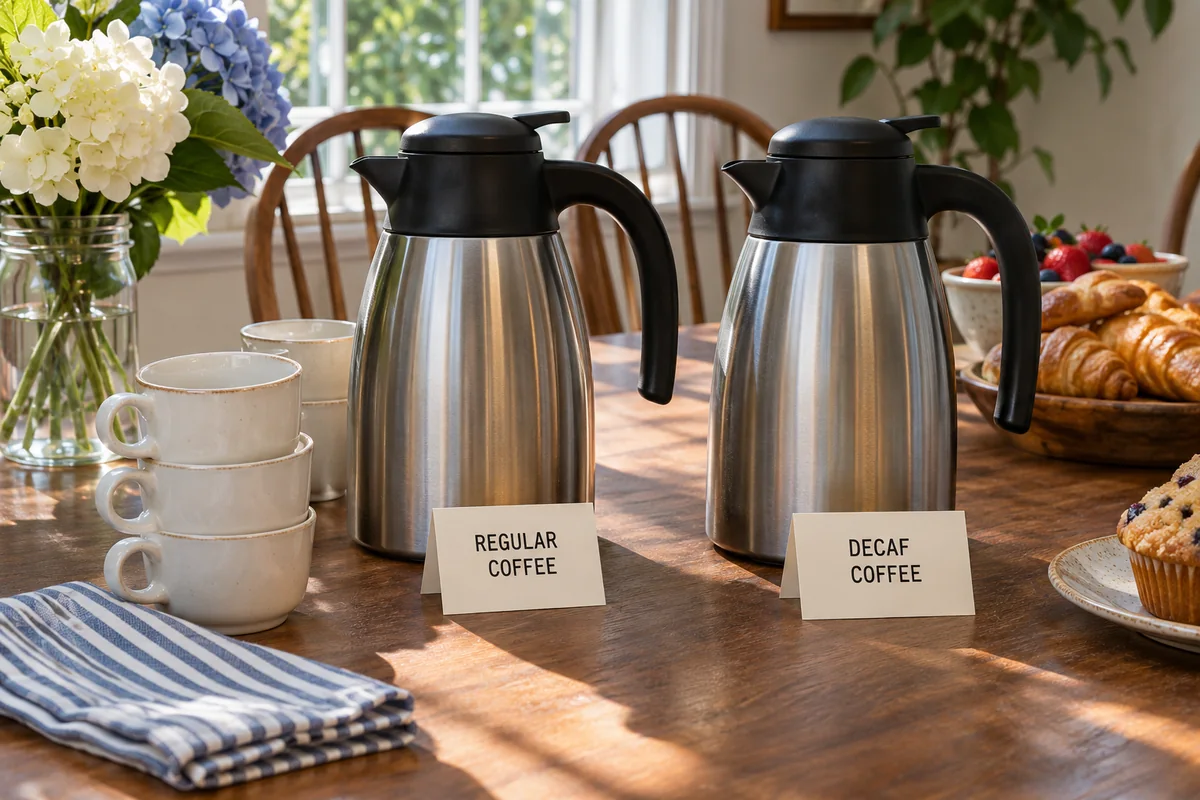
Keep a spare blank card near the kitchen end of the table. If a friend arrives with blueberry muffins, you can make one label when you know what is in the basket. If brunch runs long and the decaf pot goes away, take its card with it. An empty spot beside the regular pot is easier to understand than an orphaned DECAF sign.
Questions that come up when setting the table
Can I make the cards the night before?
Yes. Print and fold them while the table is clear. Stack the finished cards flat in menu order and tuck each one into its empty serving dish until setup. Before adding food, take the card out, open the fold, and stand it in place.
What if I only have a narrow label roll?
Try splitting a name across two short stickers. Put REGULAR on one and COFFEE on another, then center them on the same tent. Lay out both stickers with their backing still on so you can check spacing before peeling either one.
How do I handle a dish someone else brings?
Ask the cook what they call it and which details distinguish it from the other dishes. Use their wording. For packaged items, keep the original package available for guests who want the ingredient list. A short flavor description leaves room for questions about the recipe.
Which cards are worth keeping?
Save regular and decaf coffee cards together with the carafes. Keep flavor-specific cards with your hosting supplies and check the wording against the next menu. A small envelope tucked in with the cloth napkins gives you an easy place to find them next Sunday.
Start with the two dishes people are most likely to mix up. Set one finished card beside each, take a plate, and walk past them once. When you can pick your salsa or your cup of coffee without stopping to ask, the cards have done their job. Explore the NIIMBOT B1 for your next brunch.