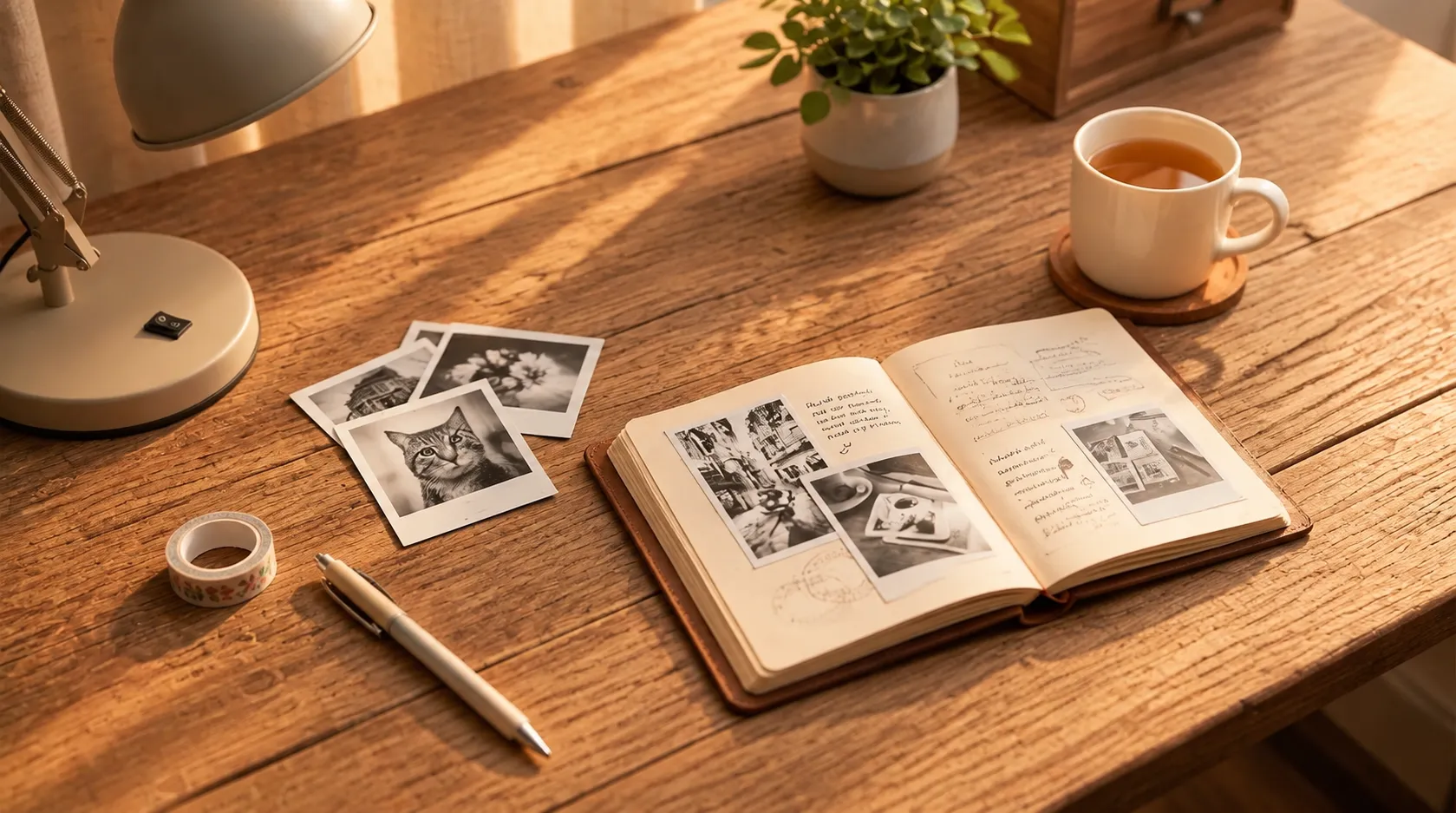
You tidy up your room on Sunday, and everything looks nice and neat. But by Wednesday, a pile of clothes is draped over your chair, random bits and pieces have taken over your desk, and you can barely see the top of your nightstand.
The issue might not be how often you clean. It could boil down to how your space is set up. When your everyday stuff doesn't have an obvious spot to live, mess creeps back fast — even right after you finish cleaning.
A room that stays tidy doesn't mean you have to spend endless time tidying it up. It just takes a few simple, practical tweaks that make it easy to put things back and keep flat surfaces clear. Here's how you can pull it off.
1.Find Out Where the Clutter Comes From
Before you rush out to buy storage bins or rearrange all your furniture, take a moment to spot where mess tends to build up. You'll probably notice the same spots get messy over and over again.
Start with Your Desk, Chair, and Bedside Table
These spots you use daily are usually the first to get messy. Your desk piles up mail, packaging, pens, and random stuff you tell yourself you'll sort out later. A chair becomes a quick drop spot for clothes, while your nightstand slowly fills up with books, skincare, and all kinds of small items.
Don't stress about cleaning the whole room at once; focus on these surfaces first. Clear off anything that doesn't belong there, toss empty packaging, and put items back where they actually belong.
Pay attention to what keeps ending up out. If your desk always gets covered with unopened mail, for example, you're better off giving mail its own dedicated spot instead of grabbing another generic storage box. Same deal for clothes that keep landing on your chair.
Keep the Floor Clear
Having an open, uncluttered floor instantly makes a room feel way bigger. Shoes stacked near the door, shopping bags sitting next to the bed, and laundry waiting to go in the wash can make even a mostly tidy bedroom feel cramped.
Try to keep these items off the floor as much as you can. A laundry basket holds worn clothes, and a small shoe rack gives your footwear a proper home. If you have bags you grab all the time, pick one fixed spot for them instead of setting them down wherever you happen to be.
2.Make Everyday Storage Easy to Use
Once you've worked out where clutter tends to pile up, think about why those items keep getting left out. More often than not, putting something away is just more hassle than leaving it sitting out.
Keep Frequently Used Items Within Reach
The best storage spot is usually close to where you actually use something. Keep your go-to bedtime items like hand cream and lip balm right next to your bed. Stash charging cables and adapters in a box near your desk, not all the way across the room.
It also helps to separate things you use daily from stuff you only pull out once in a while. There's no need to keep spare cables or seasonal accessories in your easiest-to-reach drawer if you hardly touch them.
Don't pack your storage containers so full that you have to dig through everything just to find one thing. If putting items away feels like a chore, you won't stick with it long-term.
Use Labels to Identify Similar Storage Boxes
Storage boxes are super handy, but a stack of containers that all look the same creates a new headache: you won't remember what’s inside each one.
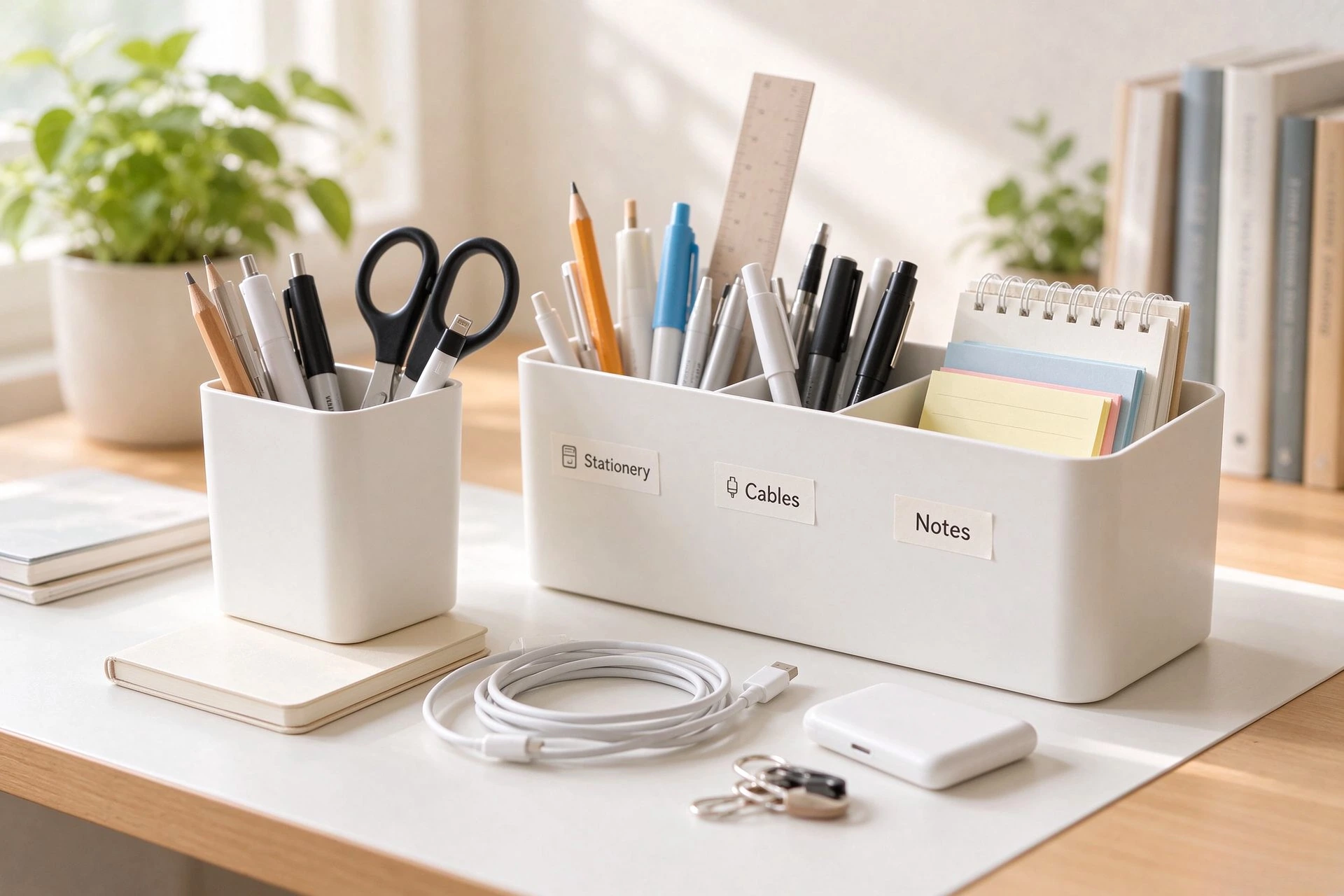
For instance, you might have separate boxes for cables, travel gear, and personal items. A simple label on the front lets you see what's inside without opening every single box.
A home label maker can make this kind of organization much easier. With the NIIMBOT D110, you can create simple labels for storage bins, making it easier to identify what's inside without opening each box. This is especially useful when you keep several similar-looking containers together on a closet shelf.
3.Make Drawers and Closets Easier to Maintain
Drawers and closets can hide a ton of mess. Shutting a drawer might make your room look cleaner on the surface, but it doesn't solve the problem if you still have to rummage through a jumble of things every time you need something.
Give Small Items Their Own Spaces
Work on one drawer at a time instead of trying to organize your whole space in one go. Empty it out, get rid of anything you don't need anymore, and group the remaining items based on what you use them for.
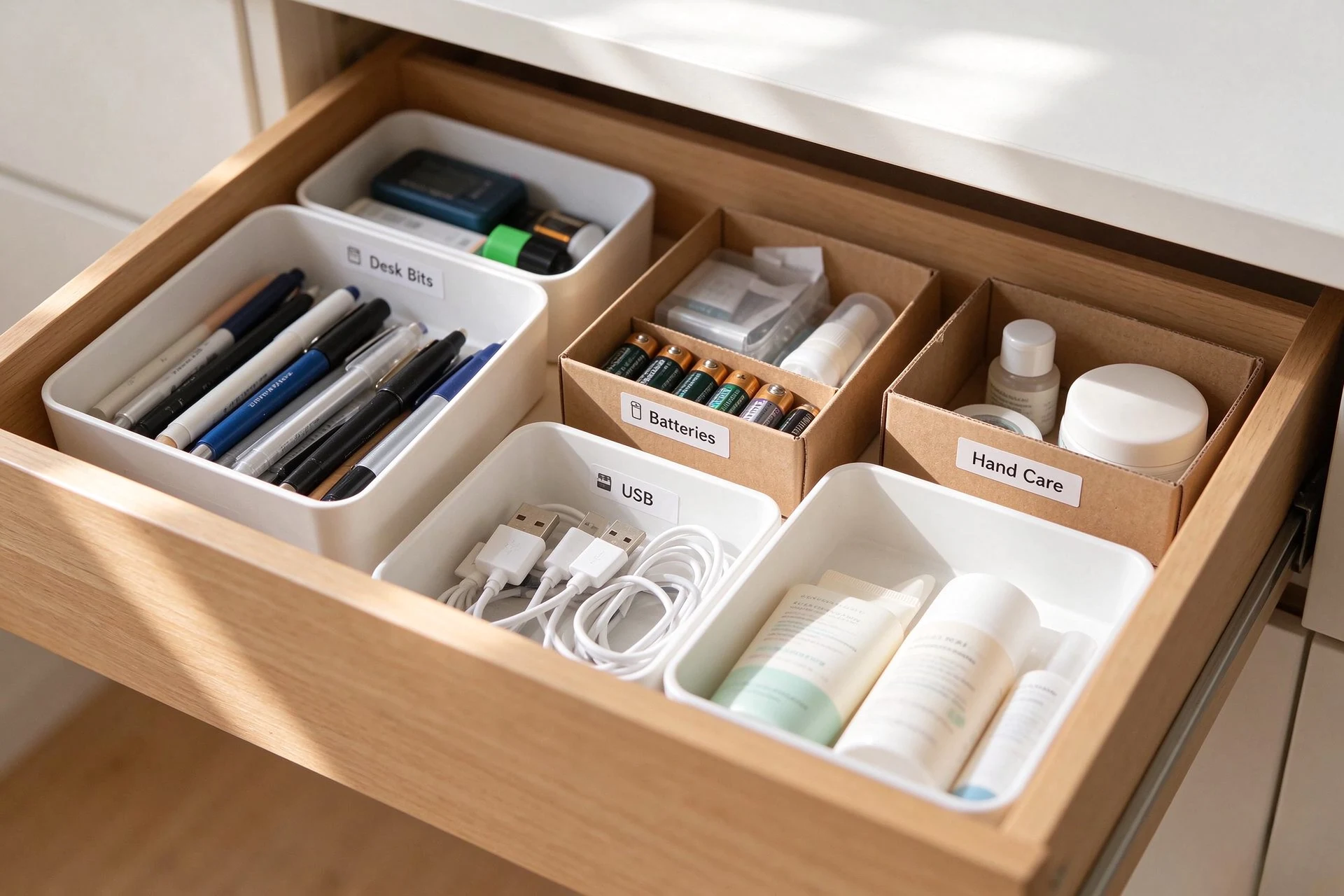
A desk drawer, for example, could have one section for stationery, another for batteries, and a little holder for USB drives or charging accessories. You don't need to buy expensive organizers to do this. Small boxes you already own work perfectly fine.
The key is making sure each group of items has enough room. When everything is crammed tight, the drawer will turn back into a mess in no time.
Make Your Closet Easier to Navigate
Clothes are another huge source of bedroom clutter. This happens a lot when clean pieces, worn outfits, and seasonal garments all get mixed together.
Try separating clothes you wear regularly from pieces you only pull out occasionally. Keep socks and small accessories grouped together, and move out-of-season items to a high shelf or another storage spot if you aren't using them.
You don't need to fold every single piece perfectly. A good closet setup is one where you can see what you own, grab what you need, and put things back without rearranging the whole shelf.
4.Make Open Shelves Look Less Crowded
Even if everything is put away neatly, a room can still feel messy if your shelves are stuffed full. Open storage stands out because everything on display shapes how your whole room feels.
Group Items and Leave Some Breathing Room
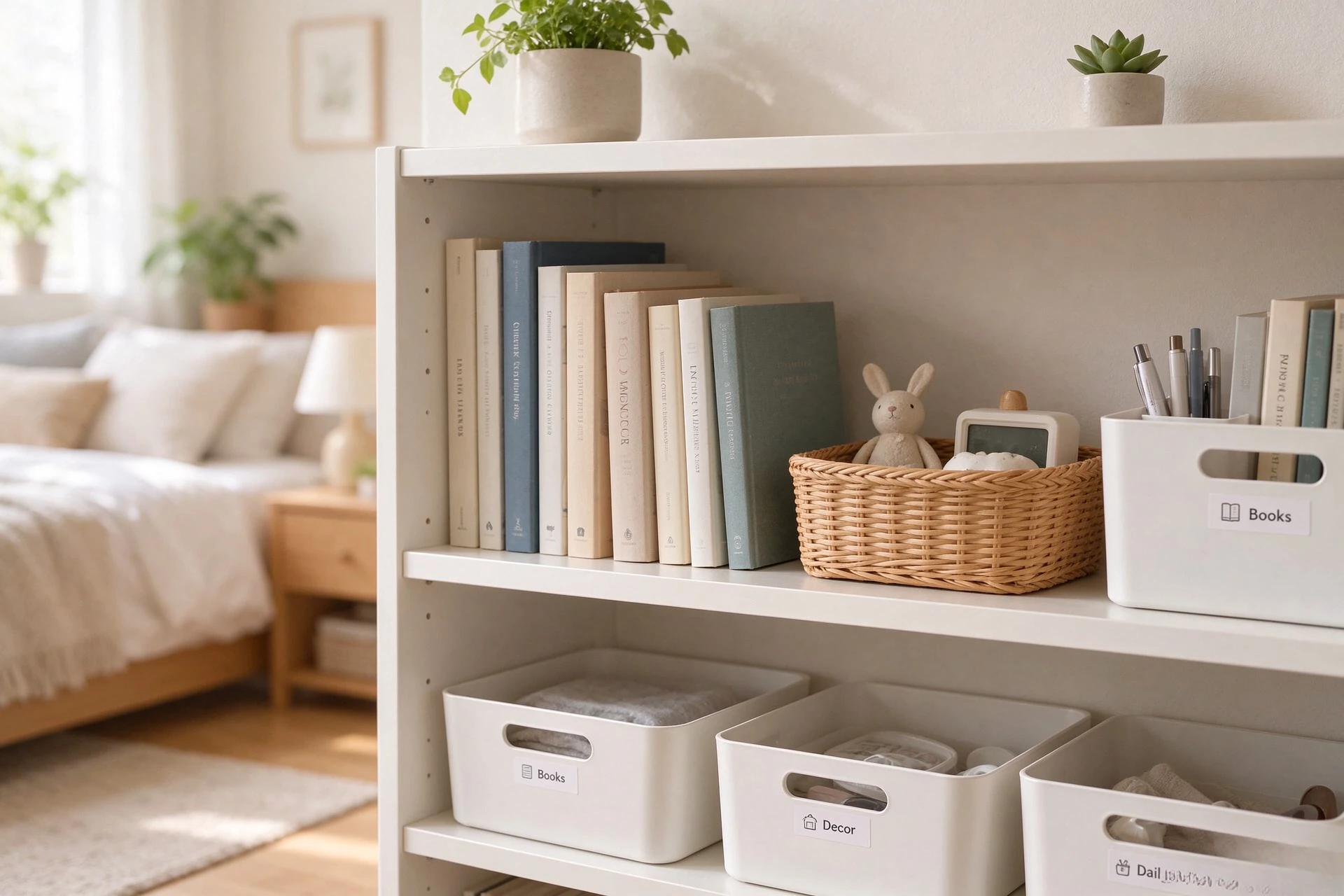
Don't fill every empty inch of space. Arrange your belongings in small clusters. Keep all your books together, tuck smaller items into a basket, and only put out a few decorative pieces.
Your shelf doesn't need to hold every book, souvenir and trinket you own. Keep things you use often easy to reach, and stow the rest away in closed storage. Leaving a little empty space between groups keeps the shelf from feeling overstuffed.
If you have multiple shelves, give each one a clear purpose. One can hold books, another can show off a few personal things, and the third can be used for practical storage.
Keep Storage Labels and Containers Consistent
When you have storage boxes spread around your room, matching them visually helps the whole space feel pulled together. They don't have to be identical. Just grouping containers with similar colors or shapes already makes a big difference.
You can also use the NIIMBOT D110 to make labels with a matching style for all your shelves and bins. This comes in handy when you add more storage containers over time and want new labels to fit the look you already have.
You don't have to put everything on display, either. Keep your daily essentials easy to grab, and tuck less-used items out of sight. This balance keeps shelves functional without turning them into packed storage piles.
5.Make Tidying Up Part of Your Routine
It's way easier to keep a room tidy when you tackle small messes before they snowball into a big job. You don't need a long cleaning session every single day. A few quick checks at the right moment do the trick.
Try a Five-Minute Reset Before Bed
Before you head to sleep, spend a few minutes putting things back where they belong. Toss worn clothes in the laundry basket, take cups out of your room, put skincare back in its organizer, and clear off your desk for the next day.
You can also tie these tiny tasks to habits you already follow. Make your bed after getting dressed, clear your desk once you finish working, or put accessories away when you change clothes.
This isn't about making your room look flawless every night. It's so you don't wake up to yesterday's mess and start your day with cleaning work.
Frequently Asked Questions
How Can You Make a Small Bedroom Look Less Cluttered?
Use the space you have thoughtfully. Keep floors clear, don’t overload shelves, and store items you rarely use inside closed containers. Picking storage that fits your room beats buying too many organizers.
How Often Should You Declutter Your Room?
There’s no universal schedule that works for everyone. Quick daily tidies handle small messes, while a deeper check every few weeks helps you get rid of stuff you no longer want.
Is a Home Label Maker Useful for Bedroom Organization?
It can be really helpful if you own multiple storage boxes, drawers or containers. Labels let you tell what’s inside, especially when boxes look the same or sit on high shelves.